We're just wrapping up a fantastic holiday in South Carolina with friends and family. After the medically-challenged last couple of summers, the return to our beloved South Carolina has been greatly appreciated! Here are some photos of our youngest transplant recipient, family & friends.
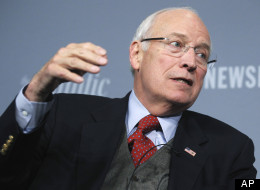
The article below is a very interesting read for the transplant community mainly because it touches on the controversy of receiving organs when you're over 65. Dick Cheney was 71 when he had his heart transplant surgery Saturday morning & was likely in great shape after having the LVAD [mechanical device that assists the heart] for two years - probably in better shape than a patient younger than 71. My dad, John, received his heart at the age of 68 & still lives an active life given his age of 83. Proof that age should not be a detractor to those waiting for organs.
WASHINGTON — Former Vice President Dick Cheney had a heart transplant Saturday, after five heart attacks over the past 25 years and countless medical procedures to keep him going. Cheney, 71, waited nearly two years for his new heart, the gift of an unknown donor.
An aide to Cheney disclosed the surgery after it was over, and said the ex-vice president was recovering at a Virginia hospital.
"Although the former vice president and his family do not know the identity of the donor, they will be forever grateful for this lifesaving gift," aide Kara Ahern said in a written statement that was authenticated by several of the Republican politician's close associates.
Cheney was recovering Saturday night at the intensive care unit of Inova Fairfax Hospital in Falls Church, Va., after surgery earlier in the day.
More than 3,100 Americans currently are on the national waiting list for a heart transplant. Just over 2,300 heart transplants were performed last year, according to the United Network for Organ Sharing. And 330 people died while waiting.
According to UNOS, 332 people over age 65 received a heart transplant last year. The majority of transplants occur in 50- to 64-year-olds.
The odds of survival are good. More than 70 percent of heart transplant recipients live at least five years, although survival is a bit lower for people over age 65.
Read the complete article from The Huffington Post Canada here
A travel-weary Dr. Neil Mackenzie picks up the package after a long day in surgery, only to face another when he returns to London.
It’s 1983 and the multi-organ transplant program at London Health Sciences Centre is in its infancy.
Then age 23, Ken Gaston is flown to London from his home in Calgary, anticipating the arrival of his new heart. Fluids are pooling in his hands and feet, his liver is failing, and his skin is yellow.
Fast-forward to Oct. 21, 2011.
A heart sits in the hands of Dr. Mackenzie Quantz.
For the 600th time, surgeons at the LHSC program are about to replace a damaged heart with a healthy one, offering patient Desmond Dias an extension on his life.
The family man will be given another summer to golf with his children.
Fast-forward again to Thursday.
A heart sits in the chest of Mark Cronk.
The 69-year-old, who waited months for a new heart, underwent a successful transplant nine days ago.
And now he sits in a room with both Gaston and Dias, as LHSC celebrates a 30-year-old program that has performed the most heart transplants of any centre in Canada. A program that has given renewed life to more than 600 patients who otherwise would not have survived.
A heart sits in the next donor who’s unaware of the chance they will give a stranger.
Posted: 01/24/2012 7:43 PM | Last Modified: 01/24/2012 11:02 PM
Erika Hernandez, 28, waves from inside an ambulance after being discharged from the hospital where she had a heart transplant in Mexico City, Tuesday Jan. 24, 2012. Hernandez made national news on Jan. 11 when her new heart was accidentally dropped while being transported to the hospital where she was waiting for surgery. Mexico City police said they used a helicopter to deliver the heart in "a rapid, precision maneuver." But after exiting the chopper, a medic stumbled and the plastic-wrapped heart tumbled out of a cooler onto the street. (AP Photo/Eduardo Verdugo)
MEXICO CITY - A heart that was dropped on the ground while being transported to a hospital has been successfully transplanted into a 28-year-old hair stylist.
Dr. Jaime Saldivar says Erika Hernandez doesn't yet know that her new heart made national news when a medic stumbled and the plastic-wrapped heart tumbled out of a cooler onto the street two weeks ago.
Saldivar says it will be up to the family to tell her.
A rosy-cheeked Hernandez spoke briefly with reporters on Tuesday and thanked the donor's family, saying "I have no words to express what I'm feeling right now."
Hernandez was born with a congenital heart defect. She received the heart of a man who died in a car accident.
Sarah Burke's death is truly a tragedy. As per her wishes, Sarah's organs and tissues were donated. Please read the article below highlighting her many accomplishments...
On January 19, 2012, the snow industry lost an icon. Sarah Burke, freeskiing pioneer, six-time X Games gold medalist, beloved wife, daughter, sister, aunt and friend passed away.
Sarah was truly a legendary athlete, role model and an inspiration. She was everything so many of us aspire to be.
Female athletes everywhere owe a debt of gratitude to Sarah's passionate trailblazing efforts over the last 15 years. As the first competitive female freeskier, she successfully lobbied the Winter X Games to include women in freeskiing events on equal standing. It is because of Sarah's efforts that female winter athletes are some of the only athletes in the world to receive equal prize purses to that of men.
Sarah brought worldwide recognition and validation to the sport she so loved. Every ski athlete chosen to represent his or her country at the 2014 Sochi Olympics will feel her influence. Without her, the sport of freeskiing would not be included.
Sarah is a pioneer of her generation. Her life and legacy embody the true spirit of action sports; a movement of individuals driven to innovate, master and explore the frontier of physical possibility. Sarah's love of skiing took her life to amazing places.
Her accomplishments on skis continue to inspire girls everywhere to believe in themselves and follow their hearts. Her passing is not a cause to pack up our skis, but rather a reason to step-in and ski for Sarah and the dreams that inspired her star to shine.
In accordance with Sarah's wishes, her organs and tissues were donated to help save the lives of others.
Sarah did so much for females and winter sports during her time with us.
Taken from: http://www2.giveforward.com/sarahburke.html
X-ray from an Italian man with two functioning hearts
At first, doctors thought they had a typical case of cardiac arrest until they examined the patient more closely and noticed his unusual medical condition. It turns out that the man actually wasn't born with two hearts. His second heart arrived after an earlier medical procedure on his original heart.
The procedure, a heterotopic transplant, is done to pair a new, healthy organ with a diseased one.
"We see this in cardiac patients or kidney patients, sometimes," Dr. Rade Vukmir, professor of emergency medicine at Temple University and a spokesman for the American College of Emergency Physicians, told MSNBC. "Surgeons might leave a kidney in place if it's too much trouble to take out, or if there is hope for recovery of a kidney, or a heart, after a period of time" of being helped by the new organ.
By Eric Pfeiffer
Read more at: http://ca.news.yahoo.com/blogs/sideshow/man-two-hearts-survives-double-heart-attack-223043465.html
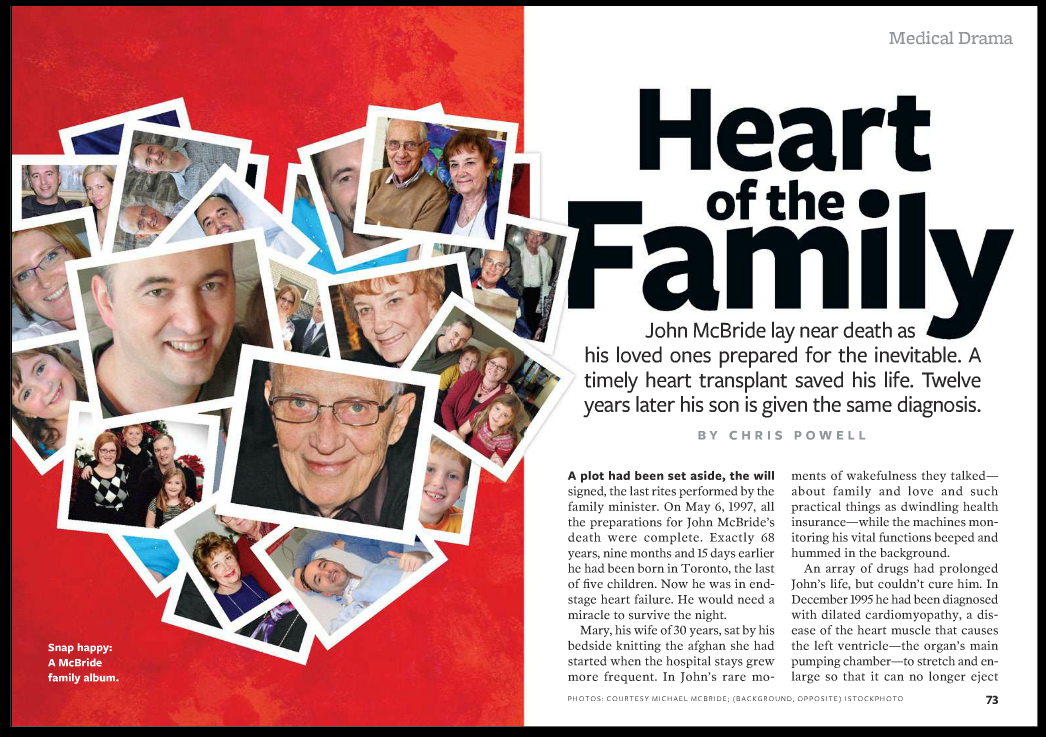
Here it is! The February, 2012 issue of Reader's Digest which has a fantastic story on my dad & brother's heart transplant journeys called Heart of the Family. It is very appropriately their "heart" issue! Author, Chris Powell, really did a wonderful job of piecing together the various details and documenting their transplants as well as emphasizing the importance of organ donation.
Here is the first paragraph as a teaser:
"A plot had been set aside, the will signed, the last rites performed by the family minister. On May 6, 1997, all the preparations for John McBride's death were complete. Exactly 68 years, 9 months and 15 days earlier he had been born in Toronto, the last of five children. Now he was in end-stage heart failure. He would need a miracle to survive the night."
Be sure to pick up a copy to read the entire article which also quotes Dr. Vivek Rao & Dr. Heather Ross.
The crash was deep in a forested, isolated area in Florida
A huge number of people are involved in an organ transplant - not just the transplant team in the OR. The night of my brother's transplant, the heart was flown in from another city in Ontario. Take off was delayed by several hours due to a terrible storm that evening. I often think of the staff involved in transporting his organ, essentially risking their lives because they flew in a storm.
Yesterday, a helicopter crashed killing transplant surgeon, Dr. Luis Bonilla, procurement technician, David Hines of the Mayo Clinic, and the pilot. They were enroute to pickup the donor heart in Gainesville, Florida.
The Mayo Clinic is quoted as saying "As we mourn this tragic event, we will remember the selfless and intense dedication they brought to making a difference in the lives of our patients," John Noseworthy, Mayo Clinic president and chief executive officer, said in a statement. "We recognize the commitment transplant teams make every day in helping patients at Mayo Clinic and beyond. Our thoughts and prayers are with the families."
Last week Michael underwent an angiogram at Toronto General Hospital. Most heart transplant recipients can expect this around the one year mark. He arrived at the hospital at 7 a.m. and was called around 10 a.m. from the procedure. Prior to being called, he was given an IV to run sodium bicarbonate which helps the kidneys as the dye used for the angiogram is very hard on these organs.
The interesting thing about Michael's angiogram is that Dr. Daley went through the wrist! Apparently, that was Dr. Daley's third time going through the wrist vs. other major arteries. The advantage of doing the angiogram through the wrist is to allow the patient mobility after the procedure. He did have some bruising at the wrist, which is to be expected.
Michael was given a pain killer/sedative prior to the procedure. Although uncomfortable, he says a biopsy is similar yet different to the angiogram. With the biopsy, the freezing is uncomfortable and the needle goes in the neck. Another short needle is used to freeze the surface and a second needle is used to freeze deeper tissue. There is a lot of pressure going into the artery - as if a size two catheter is entering a size one artery where as with the angiogram, Once the catheter got past the elbow, he says he could not longer feel it inside the artery. Yikes!
The angiogram was approximately 45-60 minutes in length. A machine was used to highlight the dye & tools inside the body. A large x-ray machine was above Michael's head. It was mobile x-ray machine used in order to see different parts of the patient's body. Upon completion, a pressure bandage is put on to keep the artery from bleeding.
After the procedure, Michael went to the sixth floor to recuperate [day surgery area] where he slept for a good chunk of the afternoon and eventually left the hospital around 5:30. He kept the pressure bandage on that night. Michael says his wrist looked like it has a shaving nick now where the entrance site was. There is also bruising halfway up the forearm where the catheter ran up the artery.
All in all, he says it wasn't as bad as he thought it would be!
Heartlinks is the heart transplant support group of Toronto General Hospital. They have several initiatives. Two annual initiatives are the Craft & Bake Sale in November & The Christmas Party in December. It's great to opportunity for fellow heart transplants & their family members to converse, get to know each other & their transplant journeys [outside of biopsy!]. Transplant staff from TGH generously share their time & drop by to see their patients in a non-medical setting. As usual, it was a great event! Thanks to Susan & Eddie for all their hard work!
My Dad, heart transplant recipient of fourteen years
A very festive Andrea & I. Andrea is approaching her one year transplanniversary just before Christmas
Eddie, heart transplant recipient, & his wife Nancy. Eddie is a driving force behind Heartlinks.
This is a very interesting story about a man being removed from the liver transplant list in the United States. The patient had been prescribed medical marijuana while battling liver cancer. The marijuana was prescribed by his physician. As his health declined, he was put on the liver transplant list. He was soon delisted because he tested positive for marijuana. It would seem that if the marijuana was part of his treatment, he should still be eligible for the transplant. Find the full article by clicking on the link at the end of the text.
Press release from Americans for Safe Access
Los Angeles, CA -- Sixty-three year-old medical marijuana patient Norman B. Smith was diagnosed with inoperable liver cancer in 2009 and sought treatment from the internationally lauded Cedars-Sinai Medical Center in Los Angeles. Smith's oncologist at Cedars-Sinai, Dr. Steven Miles, approved of his medical marijuana use as a means to deal with the effects of chemotherapy and pain from an unrelated back surgery. In September 2010, Smith became eligible for a liver transplant, but after testing positive for marijuana in February he was removed from the transplant list. Smith's cancer was in remission until just recently, but now he is scheduled to undergo radiation treatments in the next few days.
Medical marijuana advocacy group Americans for Safe Access (ASA) issued a letter today urging the Cedars-Sinai Transplant Department to promptly re-list Smith for a liver transplant. The letter also urges Cedars-Sinai to change its transplant eligibility policy. "Denying necessary transplants to medical marijuana patients is the worst kind of discrimination," said ASA Chief Counsel Joe Elford, who also authored the letter to Cedars-Sinai. "Cedars-Sinai would not be breaking any laws, federal or otherwise, by granting Norman Smith a liver transplant, and it's certainly the ethical thing to do."
Posted: 11/14/2011 11:57 AM | Last Modified: 11/15/2011 2:26 AM
Kyle Fundytus, 16, had his organs donated after a "freak" hockey accident
EDMONTON - The family of a young Edmonton hockey player who died after being hit in the neck with a puck has donated the youth's organs for transplant.
Kyle Fundytus, 16, was remembered Monday by family, team and classmates as a friendly go-getter on and off the ice who never flinched from using his body to block shots for his Midget AA team.
Hockey Edmonton officials say he was blocking a shot during a game Saturday night when he was struck, dying later in hospital of his injuries in what was being called a freak accident.
Today, my dad went to Toronto General Hospital for an Echo Stress test. He's told me that heart transplant patients who are very stable have the Echo Stress test done instead of biopsies. My dad is considered stable because he's had very little rejection for many years [He's had the donor heart for fourteen years]. A Stress Echo is made up of three parts: A resting Echo study, Stress test, and a repeat Echo while the heart is still beating fast. It is definitely far less invasive & more pleasant than a routine biopsy.
My parents at my brother's one year heart transplant anniversary celebration
Yesterday, my brother & his family threw a party to celebrate the one year anniversary of his heart transplant [otherwise known as his one year birthday]. They celebrated along side of friends & family who supported them through the past two challenging years by making hospital visits, providing emotional support, offering childcare and or to lend an ear. It was a very celebratory & positive evening.
Mark, Michael & Graham
Folks were sent home with "loot bags" containing heart shaped cookies, a green ribbon to honour organ donation, a Trillium Gift of Life pamphlet & information on beadonor.ca . It was a very nice touch!
My childhood crush, Brent, & I
Our dad's brother, Dennis with his wife, Helen, and our cousin, Kathleen
Today Michael's heart transplant journey is one year young! Michael was taken to the operating room just after midnight in the early hours of October 27th, 2010. The donor heart arrived around 1 a.m. with the surgery wrapping up around 6:15 a.m. It's been a year of ups and a year of downs, full of learning, reflecting, loving, and resilience... and also an additional year of Michael continuing to be a father, son, husband, uncle and friend.
This is also a time to reflect on the difficult time the donor family must be having as surely this anniversary does not bring the same joyful feelings. Our entire family is grateful for the priceless [and best] gift given by the donor family. Thank you.
A long-term study unveiled Monday at the Canadian Cardiovascular Congress in Vancouver found that heart-transplant survival rates were 86 per cent after one year.
The study, which looked at results since 1984 at the University of Ottawa Heart Institute, and covered the follow-up on 461 patients, also found that the younger the patient at the time of the transplant, the more successful the outcome.
“Despite being a very involved and complicated program, heart transplant is a very successful form of treatment,” said Dr. Marc Ruel, surgical director of the heart transplant program at the institute.
Without a transplant, he said patients would not have lived one more year. With a transplant, the study revealed the survival rate was 75 per cent at five years, 62 per cent at 10 years, and 36 per cent at 20 years.
“We had a patient who was still followed at 25 years and four months, so that’s the longest survival we’ve had, but many patients are still alive well beyond 20 years, and hopefully we’ll have solutions to keep them alive for a long time,” Dr. Ruel said.
The oldest person receiving a heart transplant in the study period was 74, and the youngest was 18.
Transplants can be done after the age of 65 with good results, but doctors have to carefully make their selections in order to avoid patients with other significant illnesses that would compromise lifespan or quality of life, he said.
Last year, there were 167 heart transplants in Canada, performed in five provinces. At the end of last year, 135 Canadians were on the waiting list for a heart transplant.
Modern heart transplantation became available in 1980, and the study found that survival rates have improved by more than 20 per cent in the years since.
“Eight-year survival since the 2000s is close to 90 per cent – 89.3 per cent to be exact. So this really sets a very high standard for other series to be compared upon,” Dr. Ruel said.
An international registry of heart transplants finds that survival is expected to be about 67 per cent at seven years, so the results in Ottawa compare favourably.
The first human heart transplant was done by Christiaan Barnard in South Africa in December, 1967. The patient lived for 18 days, and died of pneumonia.
The techniques of heart transplantation haven’t changed much since the pioneering days, Dr. Ruel said, but before-and-after care is much improved.
In particular, postoperative care involves immune suppression, prevention of infections and following patients carefully with biopsies, he said.
“I think having a heart transplant program in the hospital is one of the most complicated things that a hospital can get into. Despite this the results are excellent, and it almost looks as if it is routine. Well, in fact, it is very, very far from routine because of the dozens of levels of involvement that are required for successful transplantation.”
He credits donor hospitals, donor procurement and allocation agencies, recipient hospitals, teams of nurses, physiotherapists and transplant cardiologists who keep patients alive by preventing rejection and infection for many years.
The actual surgery normally takes between four and eight hours, Dr. Ruel noted. A donor heart remains viable for only four to six hours, so Ottawa transplant surgeons could probably use a heart retrieved from as far away as about Edmonton, “but certainly Vancouver would be stretching it because of the flight time and the need for sometimes refuelling, and the time to implant the heart, which takes between 70 and 90 minutes on average.”
Heart and Stroke Foundation spokesperson Dr. Beth Abramson said heart transplantation is an excellent treatment for the select few who need it – those with severe, end-stage heart failure.
She urged Canadians to sign their organ donor cards.
Here's an update as we approach the one year anniversary of Michael's heart transplant: Michael continues to battle CMV. He is at home on oral medication to fight the virus. He continues to go to Toronto General Hospital to inhale a medication that attempts to prevent pneumonia. This week, he also had a biopsy which came back showing zero rejection. This is incredible considering the low, low doses of anti-rejection drugs he's been on [my dad complains that he takes more meds than my brother!].
Michael modelling the pique line that was used to treat the CMV & caused the staph infection.
The other patients [my parents] are recovering from their car accident in August. As it turns out, my Mom has a fractured foot, fractured sternum, fractured back and several fractured ribs. That explains the constant pain she's been in!
Mom at the hospital visiting Michael days before fracturing this, that & everything else!
I must apologize for being a bit of blogger slacker....
Marc Quinet and Suzanne Camu would like a moment of your time. Their son, Thomas Quinet, 14, is on life support at the Hospital for Sick Children. The Ottawa teenager, who has been in Toronto for 14 months awaiting a second double-lung transplant, was put in an induced coma on Aug. 7 and hooked to a novalung, a ventilator to assist his breathing.
He is now on a North American-wide list for organs. He has scant weeks to live without a transplant.
Our family needs your help. Our only child, Thomas-Paul Quinet (14 years old), has a critical need for new lungs. We have been waiting for almost 14 months for suitable organs to become available. A few days ago, Thomas needed a breathing tube to continue living. He is in the hospital’s Intensive Care Unit. The doctors who are treating him have told us that, while every person is different, Thomas has a very limited amount of time to live in his current condition.
We are painfully aware of the chronic shortage of organs and tissue. There are many reasons why. One of them is the relatively small number of people who have expressed and registered their desire to donate their organs and tissue before they pass away. Children and adults of virtually any age can be potential donors. Some organs (partial and complete) can be donated while you are still living, including lungs.
Would you consider finding out how you can register your wishes to be a donor in your province or state? Just recently we found out, due to medical advances, that Thomas can now receive a gift of lungs (and life!) from across North America!
Could we ask you to do one more thing? Please speak to one other person about what you’ve just read and then ask if they would do the same. We realize there are so many great causes in our society today. Could you make our cause yours for the next few weeks?
With sincere and heartfelt thanks,
Suzanne Camu and Marc Quinet on behalf of Thomas-Paul Quinet